Since our first agroforestry experiment in 2017, we have developed six agroforestry systems (SAF 1–6), covering different stages of development from recently planted areas to mature agroforestry forests. Over the years, we have expanded carefully, allowing each system to become healthy, resilient, and low-maintenance before moving forward. Today, our SAFs range from 1 to 9 years old, offering visitors a unique opportunity to witness the evolution of agroforestry in practice. At Eco Caminhos, visitors experience hands-on learning by helping manage the systems, planting new areas, and exploring agroforestry plots at different stages of growth.
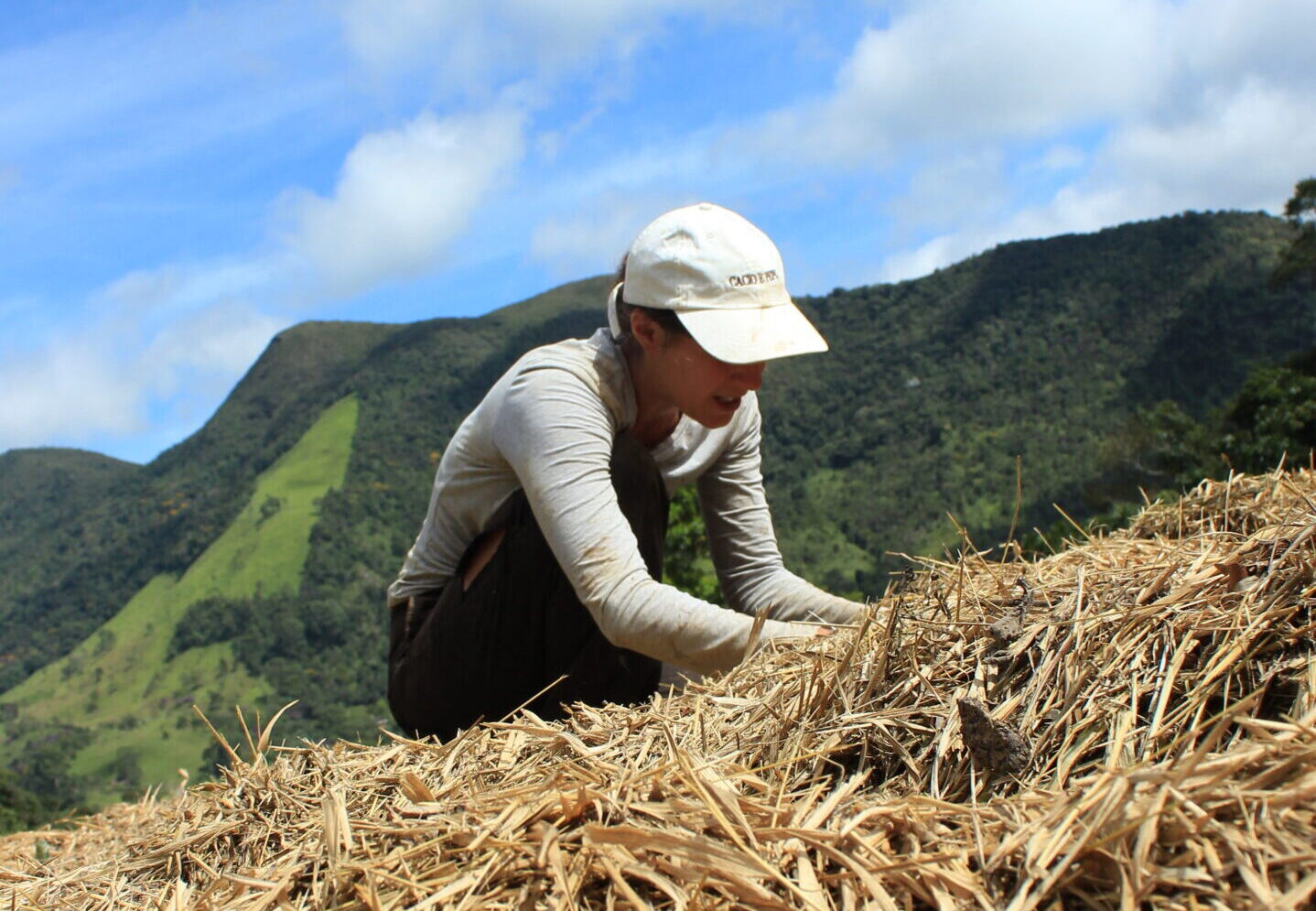
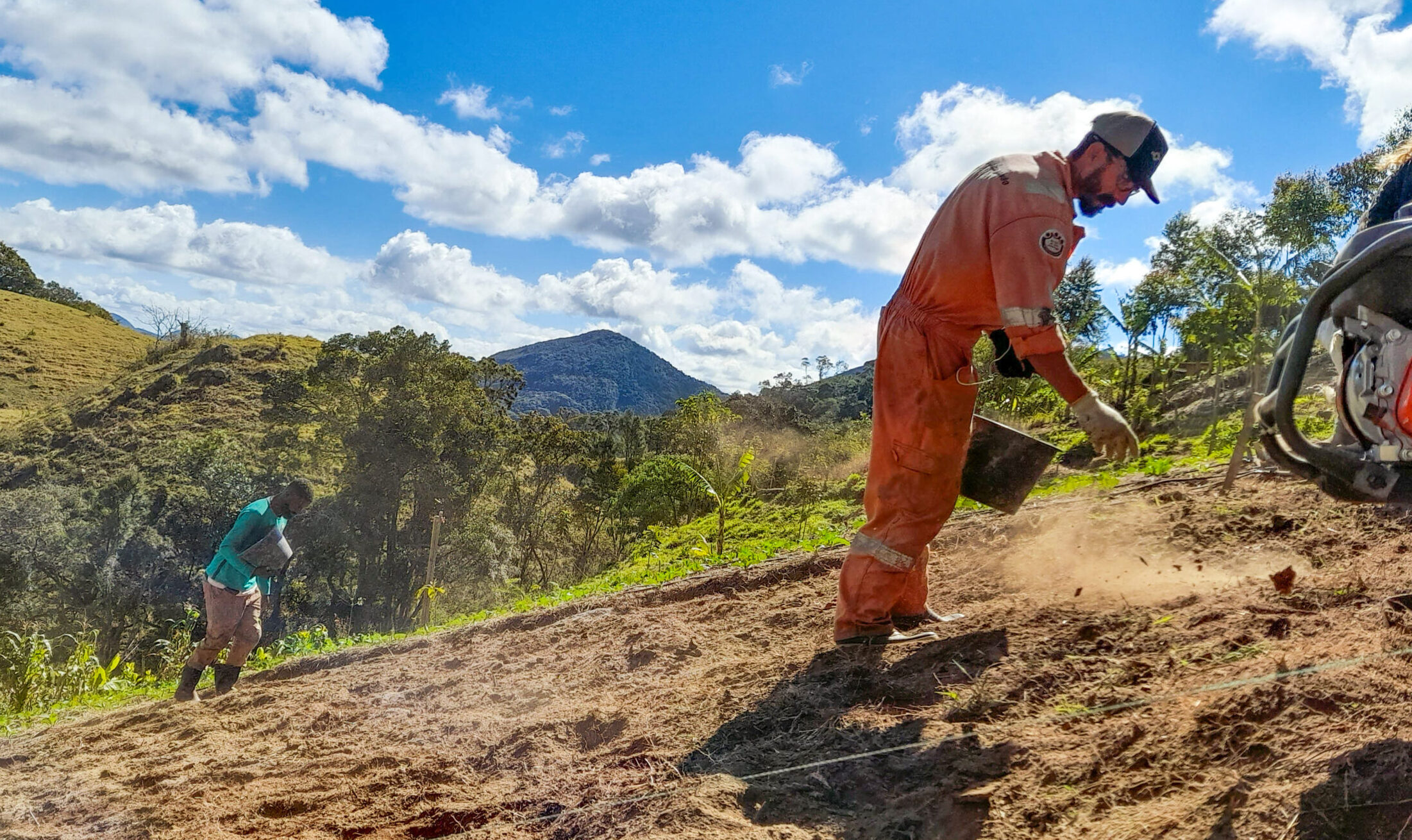 Each time we expand our agroforestry systems, we begin by carefully preparing a new area of land and protecting it with fencing so the cows cannot enter. We then restore the soil by lightly ploughing the surface, allowing air, rainwater, and plant roots to penetrate more deeply and bring life back into the ground. To rebalance the naturally acidic soil, we add limestone powder along with a rich combination of natural fertilizers, including cow manure for nitrogen, bone meal for phosphorus, and Yourin, a mineral blend rich in phosphorus, calcium, magnesium, silicon, and micronutrients. Finally, we shape the planting beds and cover them with up to 30 cm of biomass, creating a nutrient-rich foundation that protects the soil and supports healthy, regenerative growth.
 We begin by planting what we call the “placenta”, the first layer of vegetation that prepares the ideal environment for the future forest to thrive. These pioneer plants regenerate the soil, create shade, produce biomass, and restore nutrients naturally. We then introduce native Atlantic Forest species, fruit trees, and valuable hardwood trees used in our bioconstruction projects, creating a diverse and resilient ecosystem. Finally, we plant slow-growing climax trees such as ipê and jacaranda, which can live for hundreds of years and shape the future forest. After around two years, we introduce our “queen plant”, coffee, which flourishes under the balanced conditions created by the system. To finish, the beds are covered with a thick layer of biomass, protecting the soil and allowing life beneath the surface to flourish naturally.
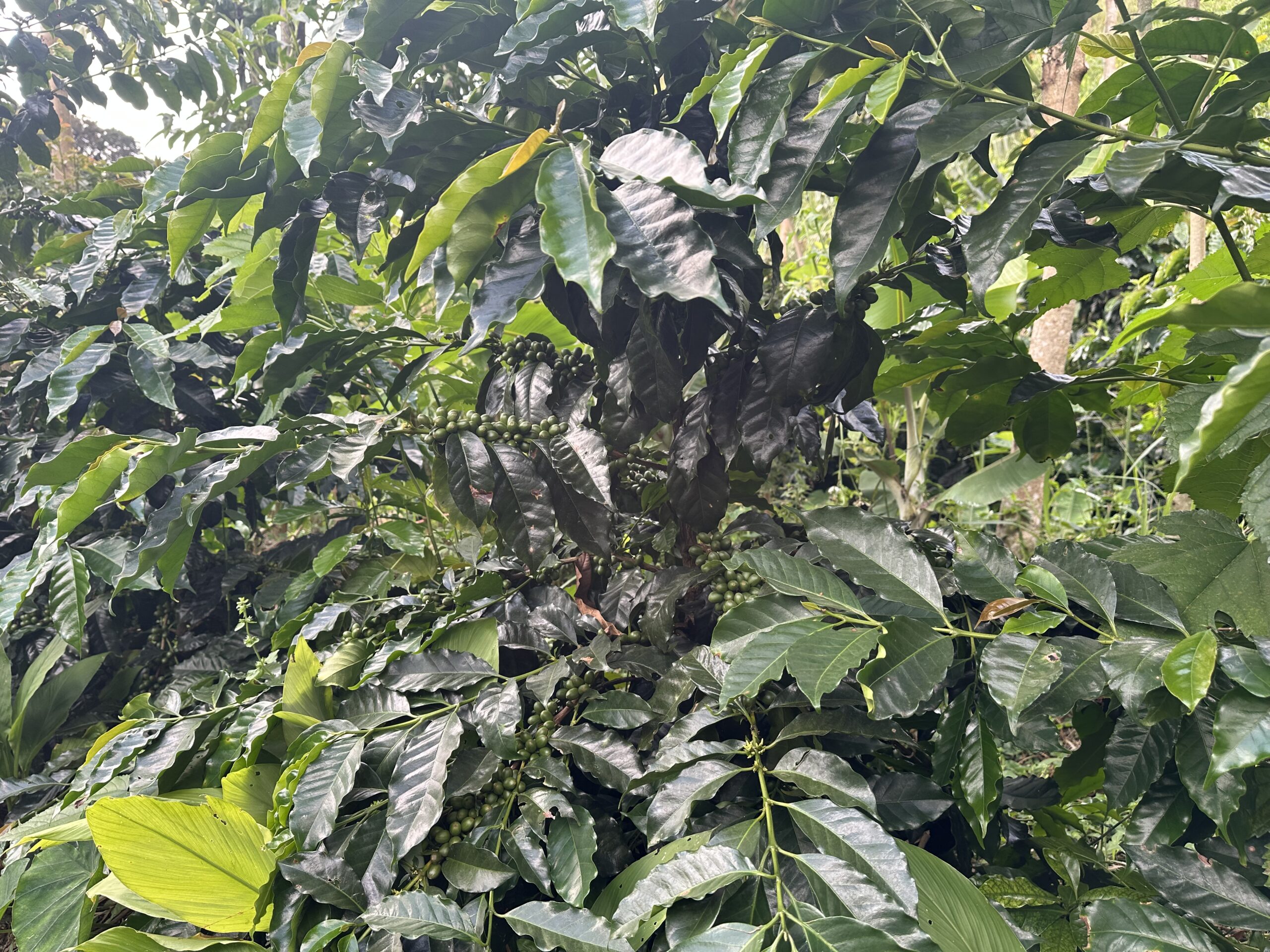 One of the main goals of our farm is to help spread agroforestry throughout the region by showing local farmers that regenerative agriculture can also be economically successful. After studying both the climate and market opportunities, we chose to focus on growing specialty organic coffee within agroforestry systems, a high-value crop with strong global demand and increasing market potential. The mountain climate of our region offers ideal conditions for coffee cultivation, especially as rising temperatures and climate change are affecting many traditional coffee-producing areas. At Eco Caminhos, we process the coffee ourselves to create a higher-value final product while demonstrating a sustainable and profitable model for the future of farming. Our goal is to expand the system to 7 hectares of coffee, and we are currently experimenting with three varieties of Arabica coffee: Araras, Catucaí Amarelo, and Catucaí Vermelho.
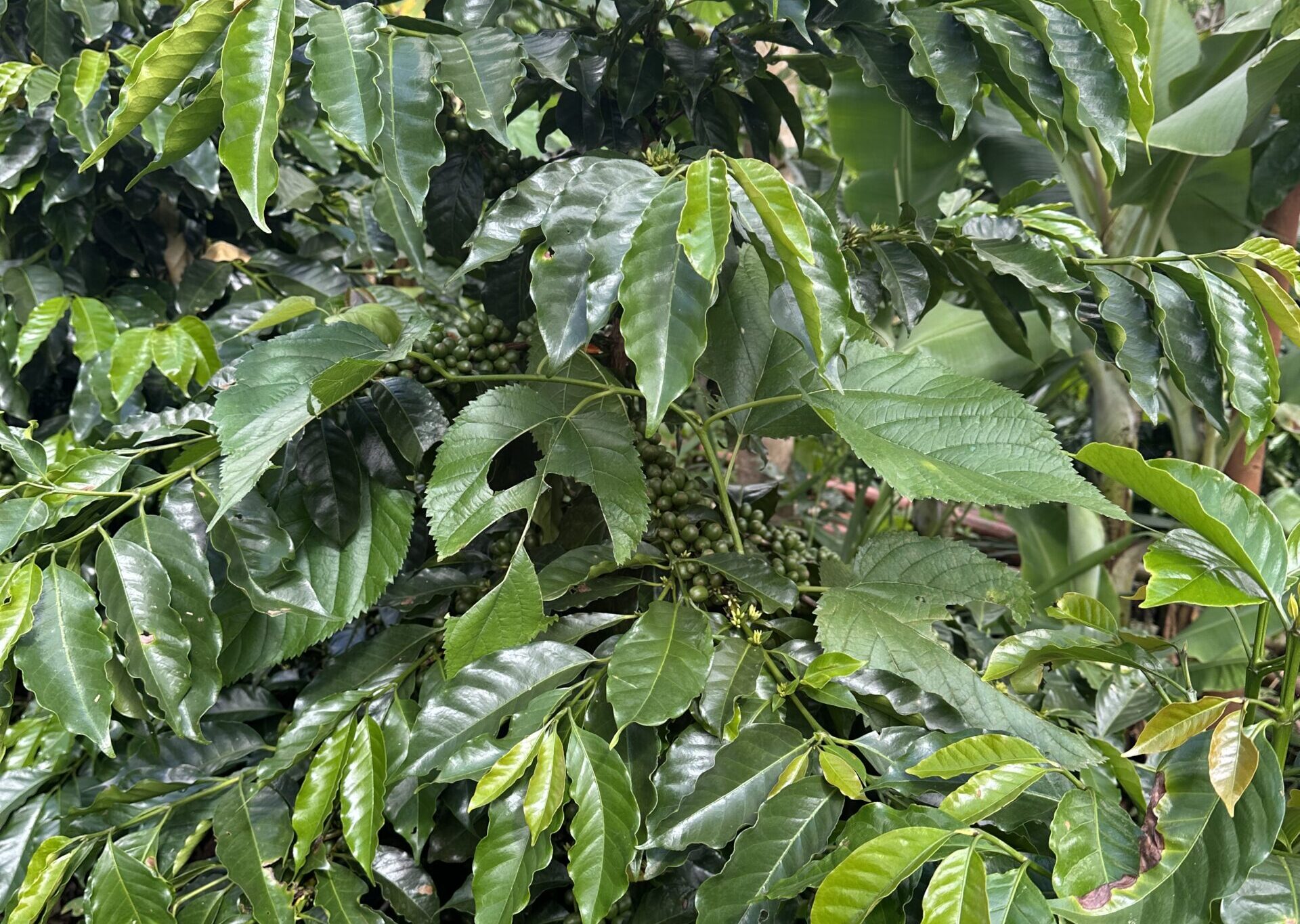 Over the years, we have been experimenting with different agroforestry designs to create the ideal environment for coffee cultivation. Through courses, field research, and hands-on experience, we have developed two main planting techniques: coffee planted directly within the tree lines alongside other species, and dense coffee planting between the tree lines to increase productivity and make the system economically viable. Today, we have planted around 4.000 coffee trees across these different systems.
One of the greatest challenges is creating the right balance of shade for the coffee plants while allowing the young native forest to develop. To support this process, we use a diversity of “placenta” plants such as cassava, mulberry, yam, turmeric, pig beans, and other fast-growing species that quickly create shade, biomass, and healthier soil conditions for the coffee trees. We carefully prune these plants to maintain the ideal light balance throughout the system.
We also integrate species like the juçara palm, a protected native palm that produces açaí, creating additional ecological and economic value. Another important innovation has been the use of Mombasa grass between the coffee lines, inspired by the techniques of Ernst Götsch. This grass produces large amounts of biomass, helps protect the soil from erosion, reduces maintenance work, and naturally stimulates growth throughout the system when pruned. Through continuous observation and experimentation, we are developing a regenerative coffee system that is both productive and in harmony with the forest.
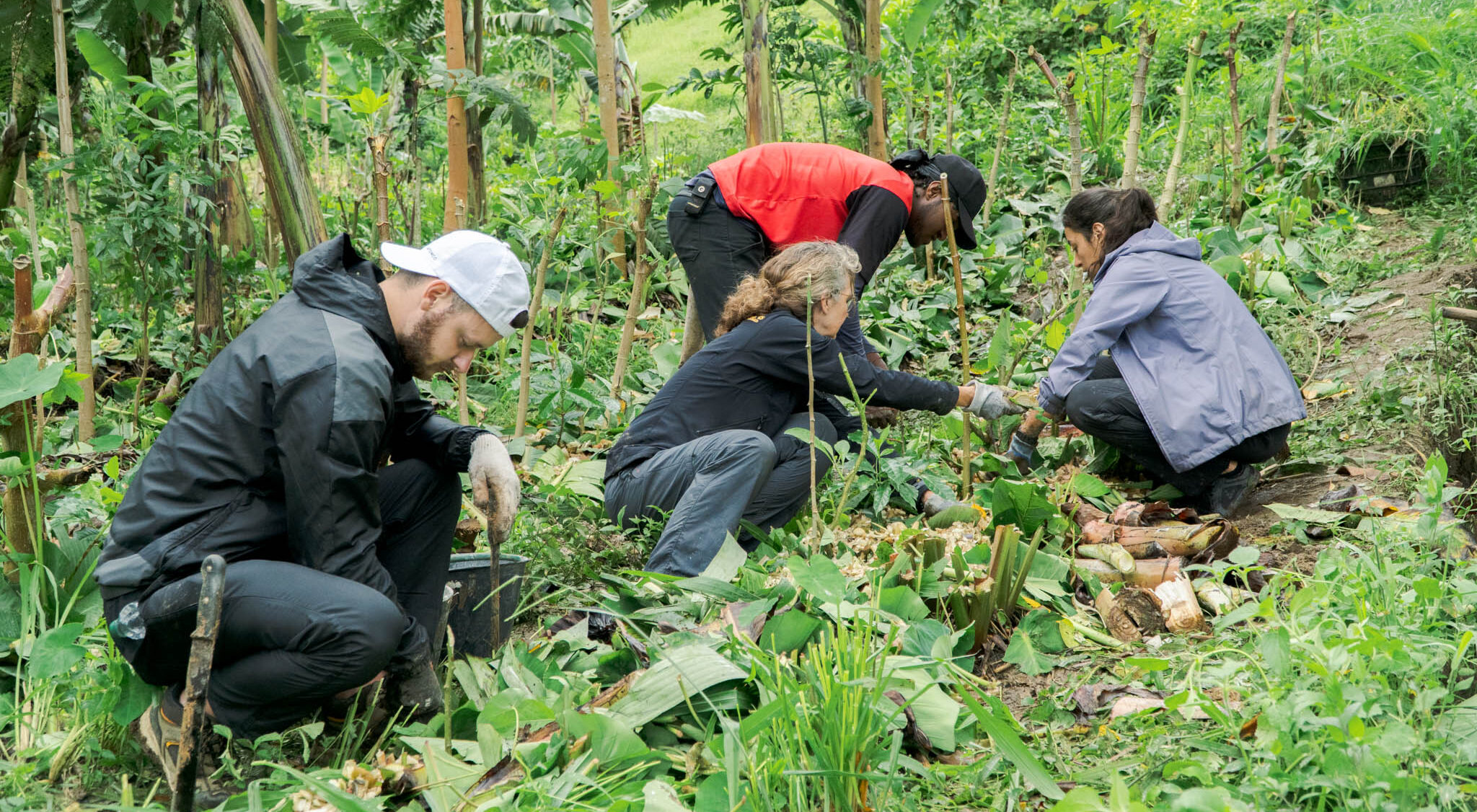
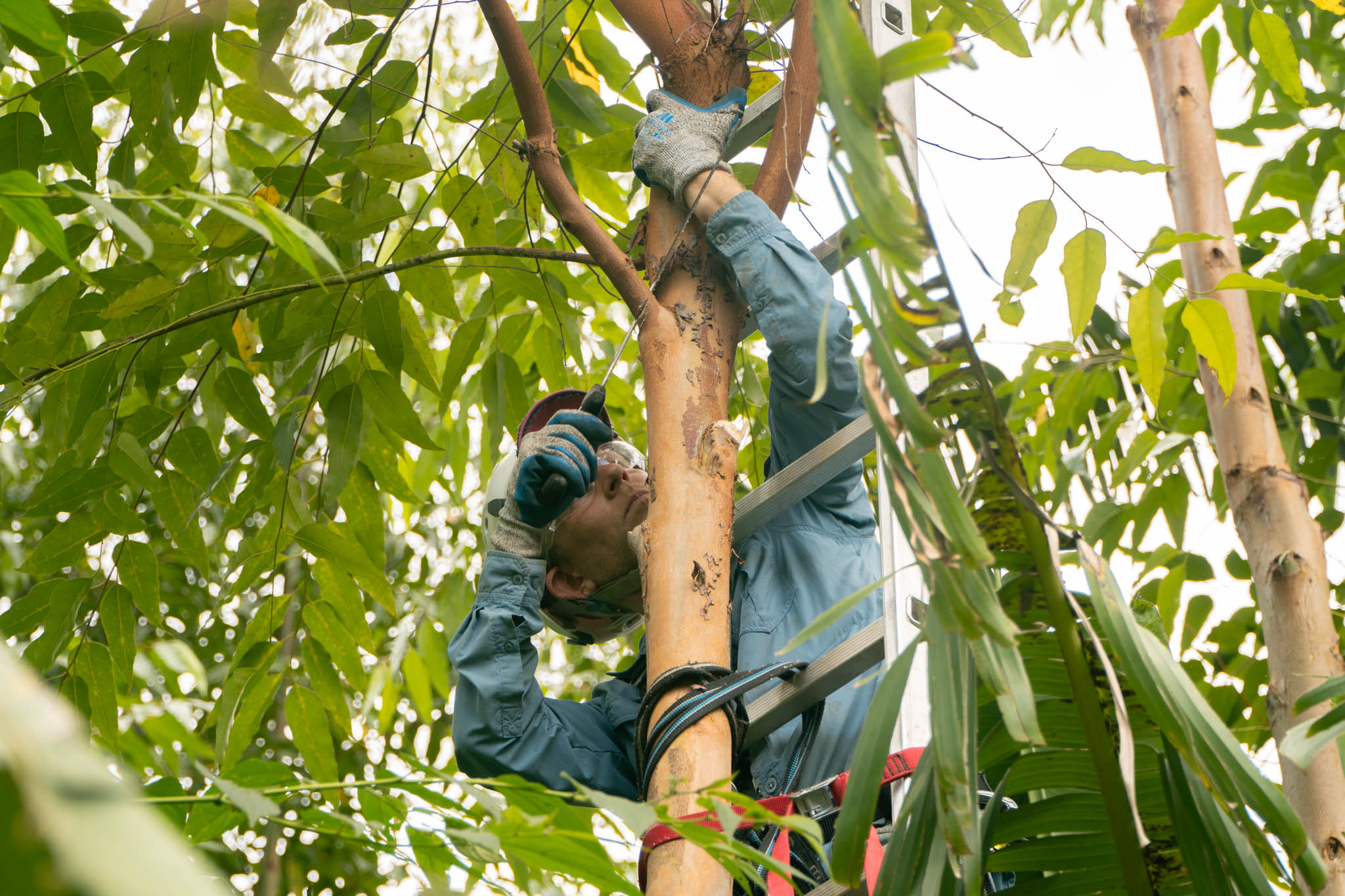
Maintenance of agroforestry systems can be a bit shocking for newcomers. But it is essential to creating abundant forests and the most labour intensive job in agroforestry systems. At Eco Caminhos we spend approximately 10% of time planting. 90% of time is maintenance. Ernst Götsch who transformed a 200 hectare degraded property into an abundant forest with restored water sources and creeks teaches these practises to his followers. He explains that in natural forest large and smaller animals, insects, storms, trees collapsing create the necessary cycles in the forest for it to develop. Pruning allows rays of light into the forrest so new trees can develop. The branches, trunks and leaves cover the soil with biomass and create the necessary food for the plants and fungi to create the mycorrhiza. Also because we plant extremely dense we need to prune, prune and prune to make sure there is enough light for the trees that will form the climax of the forest to develop. If we do nothing to our system our agroforest will stagnate and can turn into a forest dominated by some of the fast growing trees we planted densely in the placenta such as eucalyptus and bananas. So lets take you through the steps we practise in maintaining an agroforestry system
In case we enter a system where there is still grass or planted Mombasa grass has developed we start with cutting this grass with a grass cutter. We want this grass cutter to be sharp and cut the grass at the right height. For example Mombasa grass likes to be cut higher than braciaria grass as it will sprout back easier. A sharp blade is needed for a clean cut.
One of the most essential jobs in agroforestry especially in the first years of the development of the forest is selective weeding. We need to take out short cycle spontaneous weeds as these weeds consume some of the nutrients and because once these plants end their short-cycle will give signals to system that will stagnate growth. The selective weeding is one of the jobs where you can see who really wants to become an agroforestry specialist or not. A lot of people do not enjoy the weeding and often skip this part. This can seriously affect the development of your system. This because once you cover the weeds with the pruned material you are actually feeding the weeds causing a serious stagnation in your system. The longer we work with agroforestry the more precise we weed.
Before pruning we need to understand what to prune, why and how. This is difficult to explain in a few lines. We need to understand the stratification of the forest. Stratification means the quantity of light each plant wants. There is only a very small percentage of trees that like to be in the full sunlight. All other trees like some shading to a lot of shading. We are now working 9 years with agroforestry and still learning every day. We are now pruning more radically than we did in the beginning as we notice that the slow growing climax trees in the system require more light to develop. Pruning itself requires good knowledge of the trees in the system. Each tree has its preferred pruning style. Another important aspect is good tools, safety and patience.
Ordering material is not a random task. It requires order such as all tasks in agroforestry. We like to say that to become a good agroforestry farmer it requires us to understand our role in the system. You do not see any animal leaving a mess behind him. It is important to put more dense material in direct contact with the soil. Wood is the gold for agroforestry as it will decompose in rich compost for the trees and will create the mycorrhiza. Next is covering these trunks with leaves, grass and weeds that do not sprout back. There are some weeds we can not reuse as biomass because they will resprout. We compost those at specific piles.
Every time we have maintained a system it gives you a really good view of the stratification of the system. All trees, bushes and plants are at the right layer. It is now easier to identify what is missing in the system. The further a system develops the more difficult it is to replant. Except for the lower layers of the forest as these plants/trees develop well with limited light. A good example is our coffee tree we usually only plant 2 years after we have planted the other trees.
Once the entire system is maintained we make sure the irrigation system is placed back right unless the system does not need any irrigation anymore.
The frequency of maintenance of the systems depends more on our time. The more time we have the more frequent we like to go through the systems. In reality with 1 hectare we are able to maintain the entire system twice a year. We expand as soon as we have control over the entire system. We have learned by error of implementing too large systems. Since we do not manage to maintain the systems frequent enough the systems stagnate.
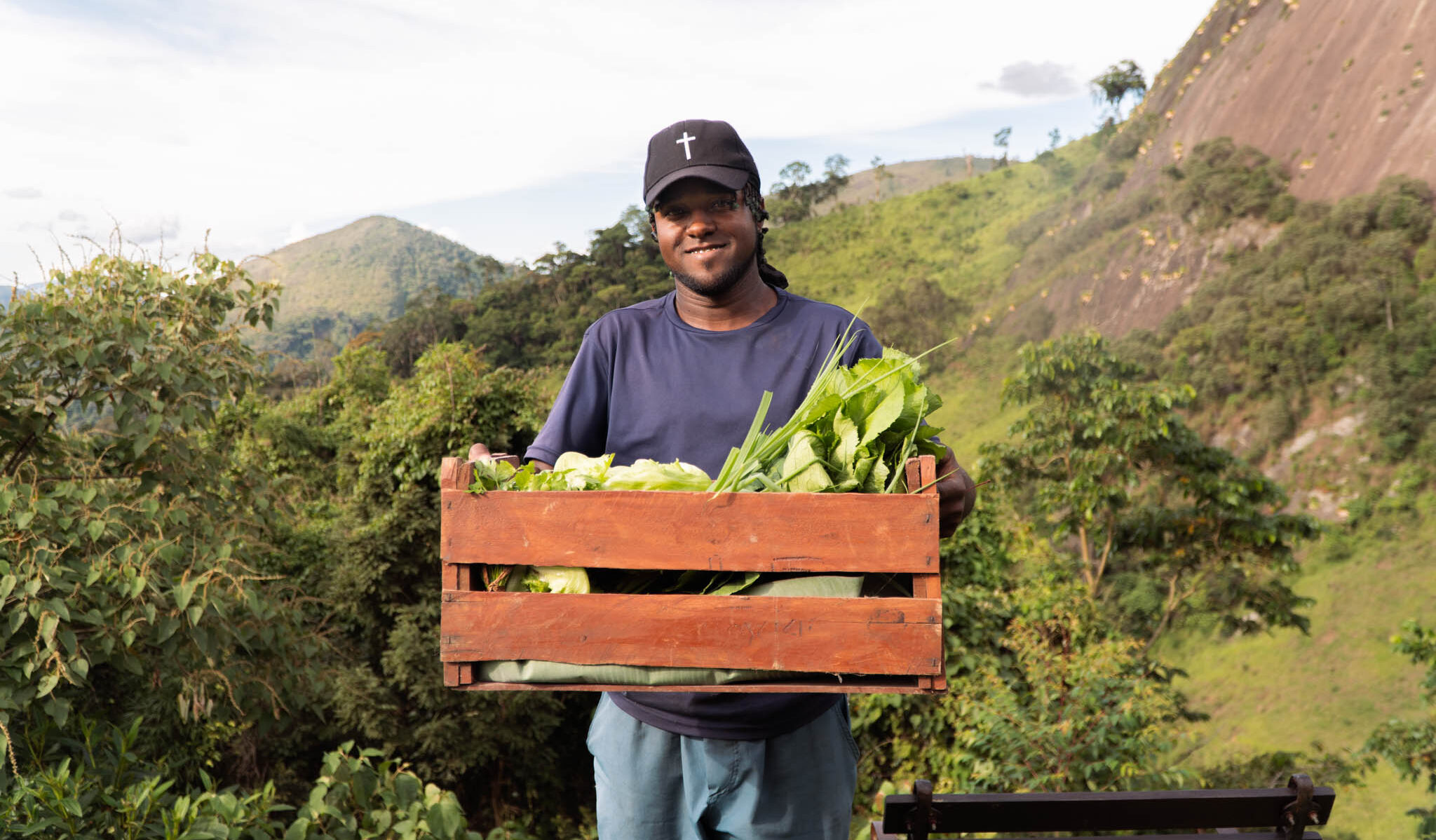 At Eco Caminhos, one of our main goals is to become fully self-sustainable in both food and building materials. Today, we already produce around 60% of the food consumed on the farm, including vegetables, fruits, milk, eggs, and meat. Our priority is to provide healthy food for everyone who lives and works here, while any abundance can be shared with the local community or sold to support the project.
What makes Eco Caminhos unique is our commitment to truly living the principles we teach. Rather than only talking about permaculture, agroforestry, and bioconstruction, we believe transformation happens through daily practice and hands-on experience. Most of the ingredients used in our lunches already come directly from the farm, and our goal is to eventually provide three meals a day sourced mainly from our own land. Volunteers, apprentices, and staff can also harvest fresh produce while learning how to do it properly and sustainably.
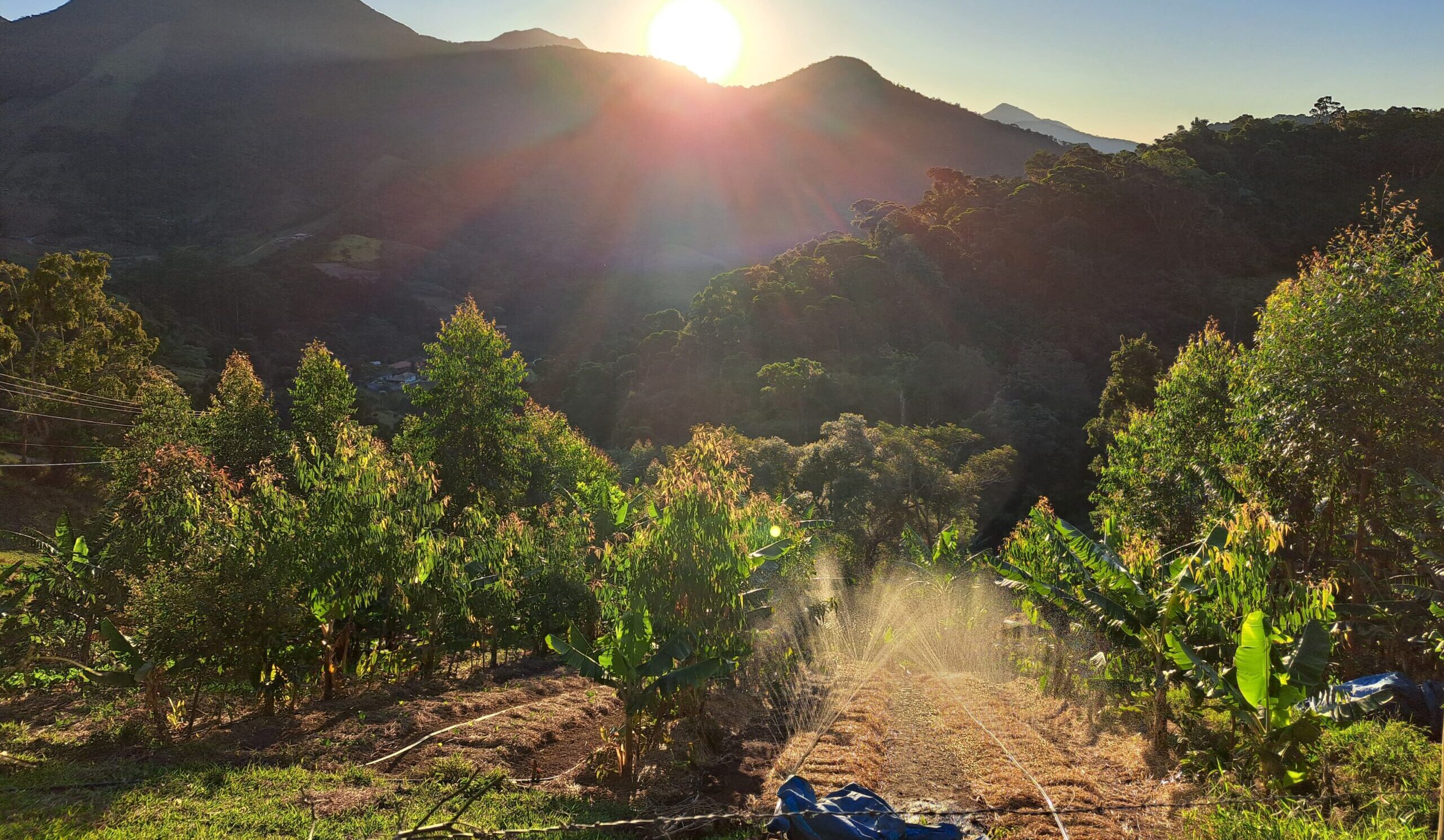 One of the great advantages of agroforestry is that, once the forest becomes established, it can thrive with little to no irrigation. After around 2–3 years, the trees have developed deep root systems, the soil is protected by thick layers of biomass, and the different layers of the forest begin working together to naturally retain moisture. As Ernst Götsch says, “we plant water by planting forests.” Rather than depending on constant irrigation, we aim to create resilient ecosystems where trees learn to search for water deep in the soil, making them stronger and more resistant to droughts.